

Labyrinth
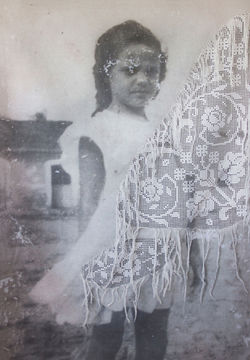
The Labirinto series originates from the life story of the artist's grandmother, a native of Serra Redonda (PB), a region renowned as Brazil's primary hub for labirinto lace production. Widowed at a young age and left without resources, the matriarch was forced to give up the guardianship of her children to other families, eventually finding a means of survival through the sale of this lace. The technical execution of labirinto operates through the logic of "dismantling": the process requires stretching linen over a frame, then counting, cutting, and removing specific threads from the fabric's weave to create an open mesh. The lace-makers then embroider over this mesh, refilling the empty (dismantled) spaces with floral patterns.
This crafting process serves as a metaphor for the dissolution of the family unit experienced by the matriarch, who had to undo the integrity of the "family fabric" to ensure the survival of its individual parts. As an act of restitution, the artist recovered photographs of his mother and estranged aunts and uncles, printed them onto linen, and brought them back to the lace-makers of the region, inviting them to intervene in the portraits—dismantling and recomposing them. In this way, the same gesture of extraction that defines the lace works to poetically renegotiate the broken weave of both the fabric and the family, attempting to reconstruct the bonds of a fragmented history.
Exhibition Catalogue


 |  |
|---|---|
 |  |
 |  |
 |  |
 |  |
 |


